

Selected experience

Case studies

67 evaluations across five continents — acquisitions, divestitures, field redevelopment, completions, bid rounds and exploration blocks. What we looked for, and what we found.

North America

32

Permian, Eagle Ford, Williston, San Juan, DJ, Gulf Coast and more — conventional, unconventional and IOR.

Acquisition review

Permian Basin · Texas

Vertical producing package, Midland Basin

An advisor-led sale of two adjacent producing positions: a conventional carbonate reservoir with stacked Wolfcamp behind-pipe potential. Well-by-well production, cumulative and initial-rate sweet-spot maps and a phased optimisation plan showed where the value really sat, and ranked drillable vertical locations separately from speculative horizontal upside.

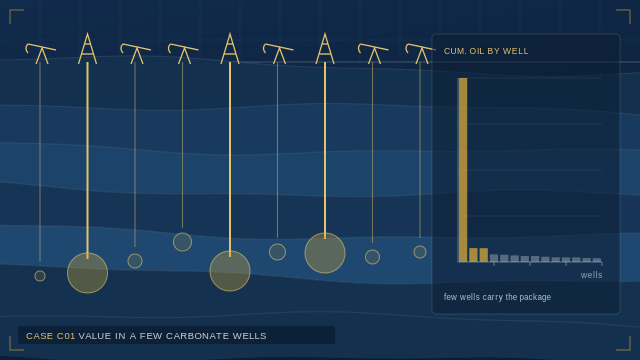
Key findingMost of the value came from a small number of carbonate wells; the second position was already above 80% water cut. Headline production overstated the package.
Due diligence

Permian Basin · Eastern Shelf

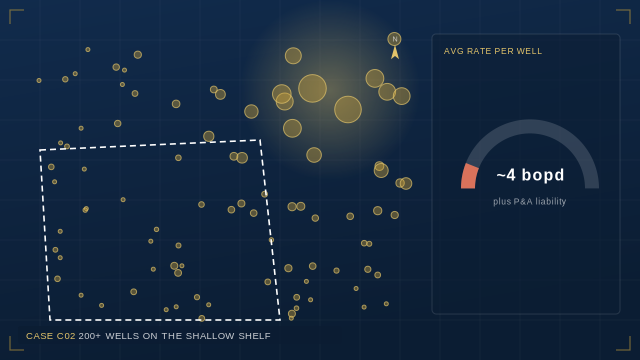
Multi-well package of 200+ wells

A package of more than 200 mostly vertical wells producing about 1,500 boe/d net was screened against regional sweet-spot mapping built from public production data.

Key findingMost sections sat on the shallow shelf outside the modern sweet spots; many wells averaged about 4 bopd, and the plugging liability was hidden behind the total-rate figure.

Divestiture evaluation

DJ Basin · Colorado

Niobrara–Codell horizontal package

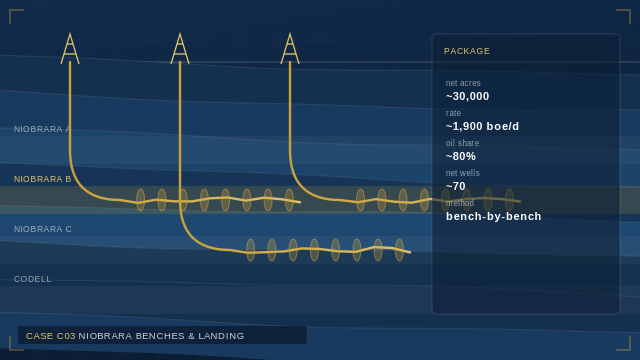
About 30,000 net acres, mostly held by production, with around 1,900 boe/d (about 80% oil) from some 70 net wells. Reserves were rebuilt at year-end, offset horizontal wells were analysed bench by bench, and lateral placement was studied across the Niobrara benches.

Key findingData-room claims were tied to bench-level evidence instead of headline type curves.

Asset evaluation

Eagle Ford · South Texas

Eagle Ford oil-window position

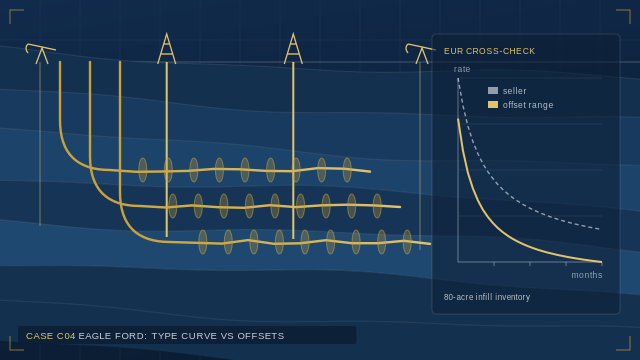
An operated oil-window position with more than 30 producing wells (about 1,600 bopd) and more than 8,000 acres held by production. Per-well EUR and drilling-cost assumptions were cross-checked against regional offset initial rates, and an infill inventory at 80-acre spacing was counted.

Key findingA regional benchmark range can test a seller's type curve before price is discussed.

Development evaluation

Permian Basin · New Mexico

Horizontal San Andres development

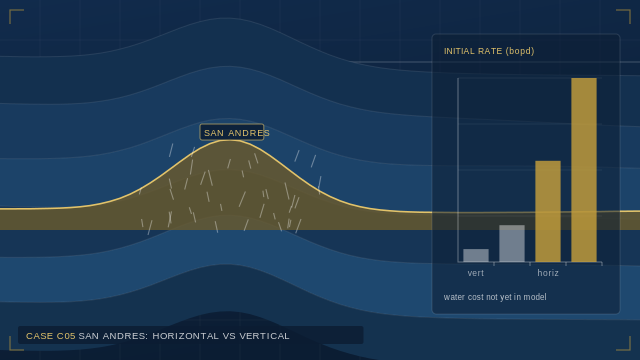
An operated conventional San Andres position of about 17,000 net acres producing roughly 3,400 boe/d, with deeper Mississippian, Devonian and Wolfcamp upside. Horizontal wells came on at 200–450 bopd versus 10–50 bopd from acidised verticals.

Key findingSingle-well economics on fitted production from ten wells were near breakeven at low prices — mainly because produced-water handling had not been costed.

JV screening · declined

Bend Arch · North Texas

Large-acreage carbonate joint venture

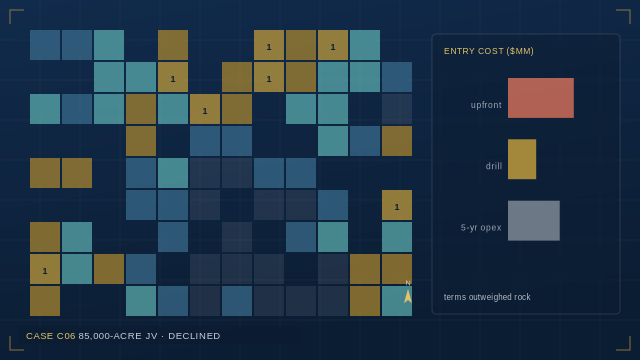
A joint-venture proposal over about 85,000 acres targeting shoaling carbonates with horizontal wells. Local geology was attractive, but the entry required roughly $40 million up front for half the leasehold plus further drilling capital within 18 months.

Key findingRecommended declining: good rock does not rescue unfavourable terms and an oversized capital commitment.

Acquisition review · declined

Fort Worth Basin · North Texas

Shallow mature waterflood

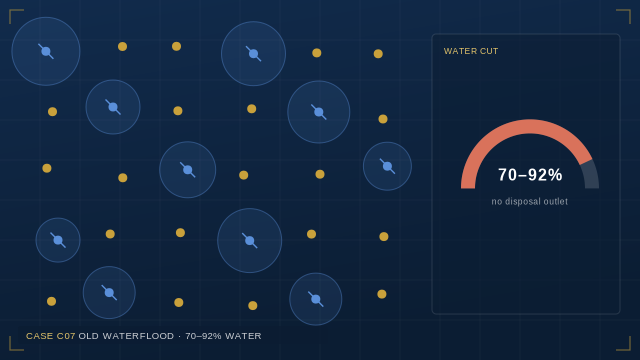
A low-priced package of old wells in a shallow carbonate waterflood looked cheap on purchase and drilling cost.

Key findingWater cut of 70–92% after decades of flooding, no practical disposal outlet and a heavy plugging liability. Cheap to buy, expensive to own.

Divestiture analysis

Powder River Basin · Wyoming

Waterflood units and override interests

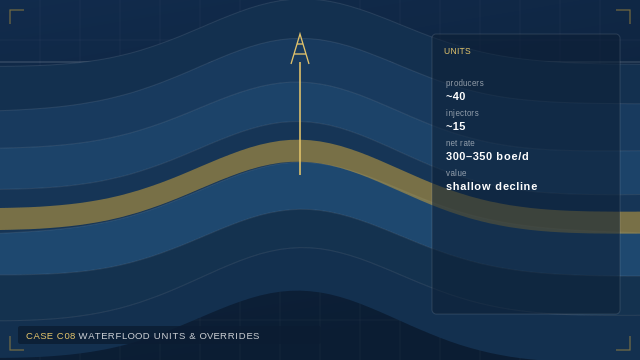
A major's divestiture of operated waterflood units plus override interests in about 140 wells (about 40 producers and 15 injectors, 300–350 net boe/d).

Key findingValue lay in predictable shallow declines, injection–production balance and the equipment inventory — not in new drilling.

Fast evaluation

Gulf Coast · South Louisiana

Producing gas fields package

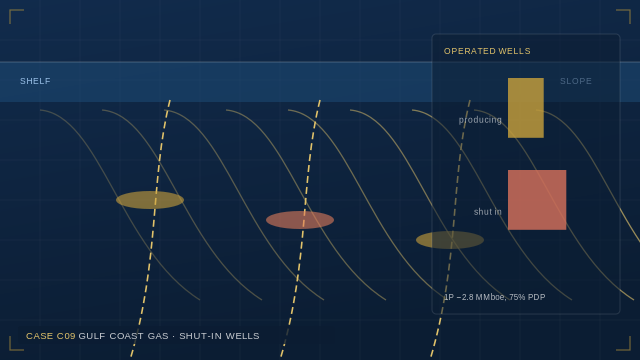
Four Gulf Coast gas fields producing about 6 MMcfe/d net with roughly 2.8 MMboe of proved reserves were evaluated in a few days: seller reserves by category, behind-pipe sands in key logs, leases, shut-in wells and costs.

Key findingAbout 60% of operated wells were shut in; the real question was why, and what a workover programme would actually recover.

Field redevelopment plan

Four Corners · New Mexico

Phased redevelopment of a shut-in shallow oil field

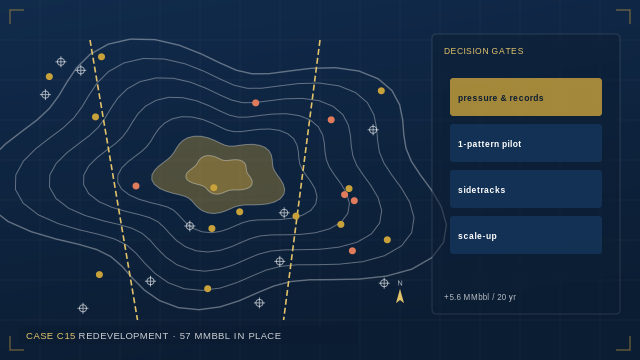
A four-block sandstone field with about 57 MMbbl in place and only 13% recovered was re-planned with history-matched simulation, a 1,500-field analog study and phased economics. Waterflood, sidetracks and pilots were sequenced by the value of the information each step delivers.

Key findingAbout 5.6 MMbbl incremental over 20 years for about $15 MM capex; still positive at $50 oil.

Waterflood optimisation

Four Corners · New Mexico

Injector patterns from old wellbores only

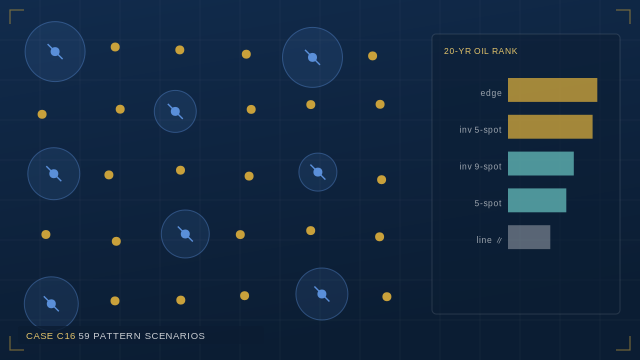
Fifty-nine pattern and pressure scenarios were simulated using only existing wellbores as injectors, under injection-pressure limits and two fracture-direction assumptions.

Key findingEdge and inverted five-spot floods were robust; rows parallel to fractures were not best; injection between laterals raised one block's NPV by about 50%.

Well design review

Four Corners · New Mexico

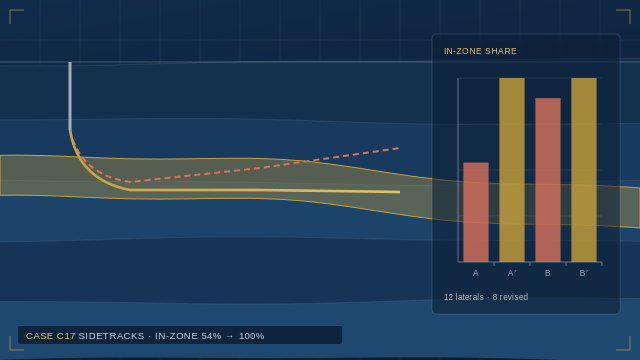
Pre-drill validation of shallow horizontal sidetracks

Twelve short laterals at about 1,000 ft were re-computed against a log-calibrated 3D model, with torque-and-drag, hydraulics, anti-collision and flood-front interference checks.

Key findingTwo of three permitted designs would have left the sand; changing only tangent length and inclination lifted in-zone share from about 54% and 89% to about 100%.

Exploration risk review

Four Corners · New Mexico

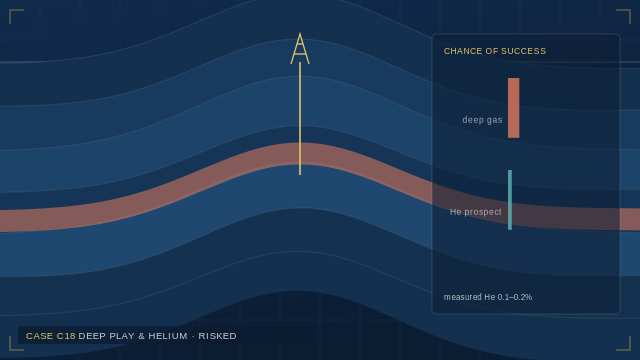
Deep play and helium on a lease without deep wells

Eight offset deep wells and 33 drill-stem tests were re-read page by page, the deep carbonate was mapped with trend surfaces, and oil, gas and helium potential were risked probabilistically.

Key findingPromotional numbers were replaced with measured ones (helium about 0.1–0.2%); the path forward is seismic first, partner second, drill third.

Operations feasibility

San Juan Basin

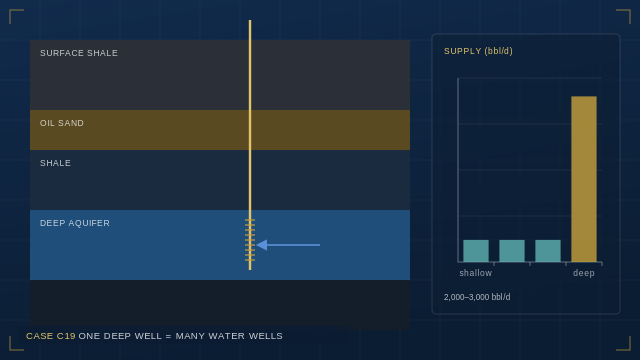
Water for fracturing and injection where none seemed to exist

Public water-chemistry and groundwater databases and a regional hydrology report showed no shallow aquifer under the field and produced water unfit for crosslinked fluid.

Key findingA plugged deep well with intact perforations, re-completed, can supply about 2,000–3,000 bbl/d — the equivalent of many shallow water wells.

Well intervention

Four Corners · New Mexico

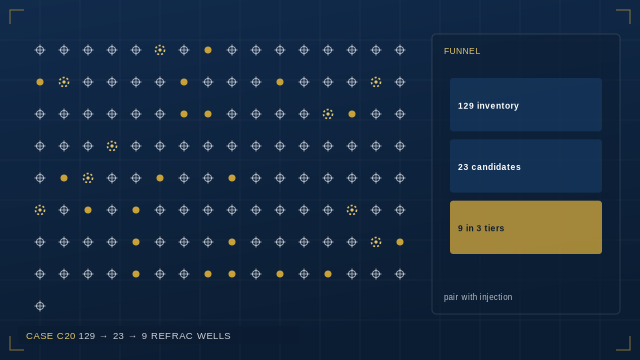
Refrac ranking against a service company's rules

A 129-well inventory was screened to 23 candidates and scored on a 100-point system; every contractor criterion was checked and unmet items were reported openly.

Key findingNine wells in three tiers; low reservoir energy means refracs must be paired with injection or energised fluid.

Reserves audit

Four Corners · New Mexico

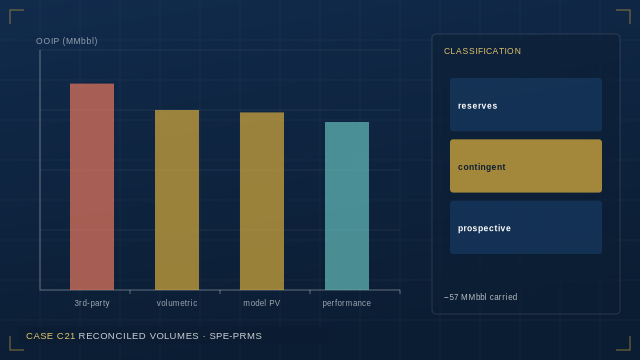
Resource reconciliation before investors see the numbers

Volumetric, model-based and third-party figures were reconciled; table bias, an area-basis error and mis-classified volumes were found, and everything was re-classified under SPE-PRMS.

Key findingIn-place oil carried at about 57 MMbbl; an unsupported deep-play value was withdrawn from outward use.

Geomodelling study

Four Corners · New Mexico

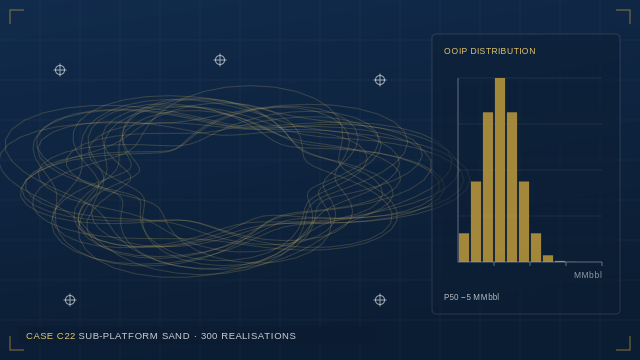
Sand bodies under a platform with only dry holes for control

Facies-constrained object simulation over 300 realisations predicted sand extent where only dry holes bound the area, and was compared with a dozen interpolation methods.

Key findingP50 in-place about 5 MMbbl with a wide P90–P10 range; a conditional phase-1 plan of injectors plus sidetracks.

Completion diagnosis

Williston Basin · Montana

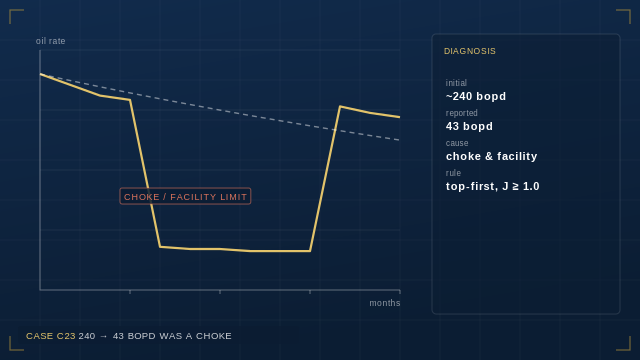
A 'declining' well that was really choked back

A flowing bottom-water carbonate well fell from about 240 to 43 bopd and was about to be written down. Facility, choke and pressure data were reviewed against reservoir decline and global flowing-completion practice.

Key findingThe drop was a choke and facility limit, not depletion; completions now follow a top-first sequence with a productivity gate.

Reserves & seismic

Williston Basin · Montana

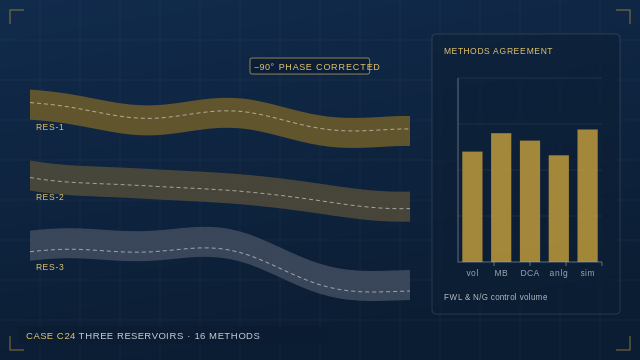
Three-reservoir PRMS report with seismic re-interpretation

Some 20,000 acres across three carbonate reservoirs were assessed with 16 methods, calibrated to cores and drill-stem tests. The seismic volume was re-interpreted after a −90° phase error and horizons mis-picked by 13–44 ms were found.

Key findingFree-water level and net-to-gross, not area, control the volumes; a corrected pilot-hole depth changed the structural picture.

Play-fairway study

Williston Basin · Montana

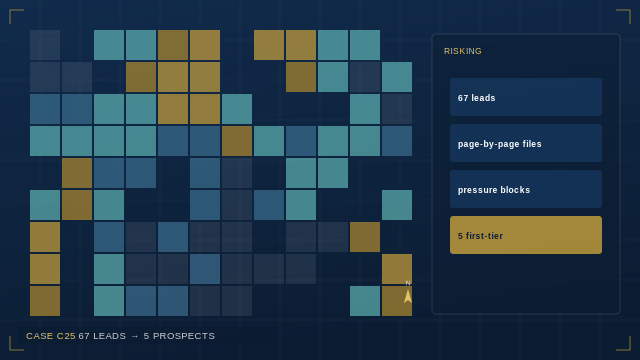
County-wide prospect ranking from 170 old well files

Every old well file in a county was read page by page — shows, lost-circulation zones, tests and pressures — and 67 leads were risked on source, reservoir, trap, seal and pressure compartments.

Key findingA first tier of five prospects; pressure mapping showed separate blocks with no common free-water level, so one prospect was downgraded.

Field strategy

Williston Basin · Montana

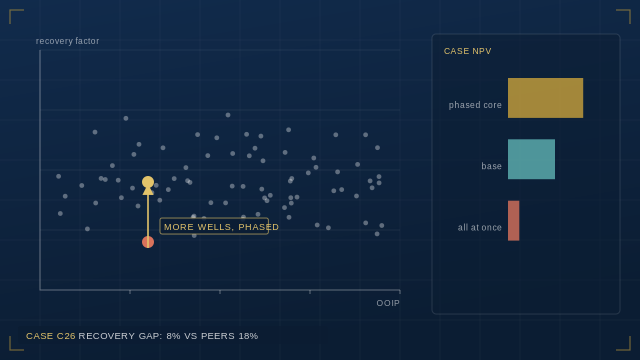
Why a carbonate field recovers 8% when its peers recover 18%

The field was benchmarked against hundreds of carbonate peers rebuilt for the study; recovery was decomposed into efficiency terms and development options were ranked by risked value.

Key findingThe gap is too few wells, not poor rock; a phased core plan adds value while drilling everything at once destroys it.

Appraisal well

Permian Basin · Midland

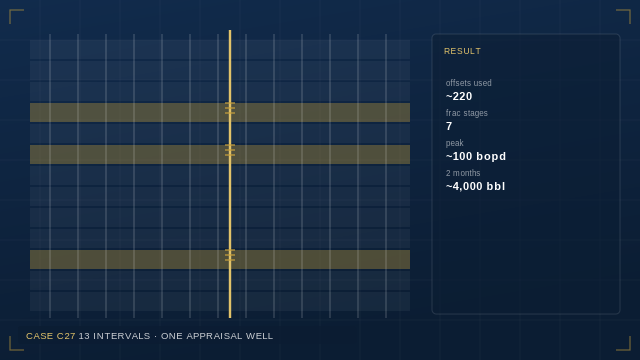
First appraisal well in a 13-interval mature area

About 220 offset vertical wells were reviewed across 13 intervals to pick an appraisal well that could test several zones at once; it was fractured in seven stages and put on rod lift.

Key findingCommingled production from sandstone, carbonate and mudstone worked — about 100 bopd at peak and 4,000 bbl in two months.

Formation evaluation

Permian Basin · Midland

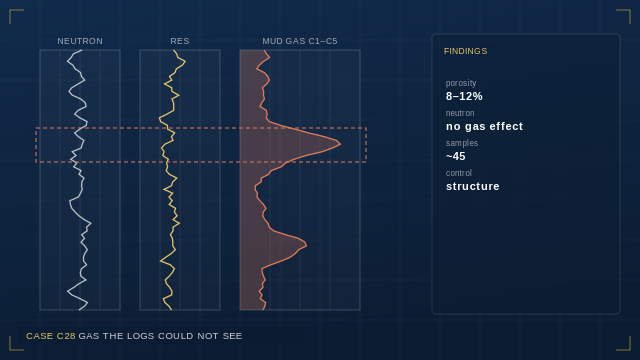
When logs miss the gas: mud-gas and cuttings fingerprints

Tight sandstone at 8–12% porosity showed no neutron gas effect, yet production proved gas on the structural high. About 45 mud-gas and sealed-cuttings samples from a new well were analysed with a university laboratory.

Key findingGas–oil separation follows structure; the sandstone should be produced apart from the multi-zone group.

Completion diagnosis

Permian Basin · Midland

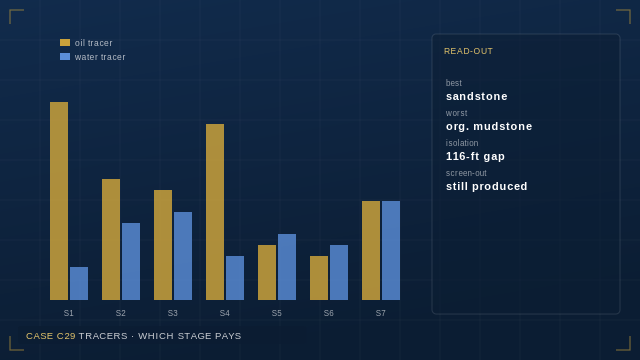
Which stage pays? Tracers in a seven-stage well

Each of seven frac stages carried its own oil- and water-soluble tracer, sampled daily and then every few days over the early life of the well.

Key findingSandstone gave most oil and least water, organic mudstone the least; a screened-out stage still produced; a 116-ft gap isolated stages.

Acreage evaluation

East Texas · Austin Chalk & Woodbine

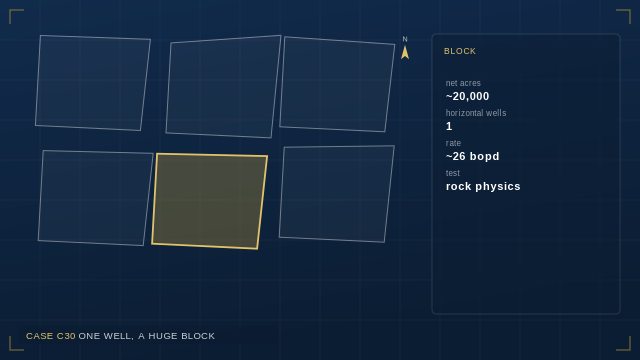
Large frontier acreage with one horizontal well

About 20,000 net acres inside a much larger block, with a single horizontal well at about 26 bopd, was priced off a nearby discovery. We tested whether seismic rock physics could actually see the reservoir.

Key findingValue hinged on water, facilities and whether impedance separates pay — not on the neighbour's headline well.

Lease-sale strategy

Permian Basin · West Texas

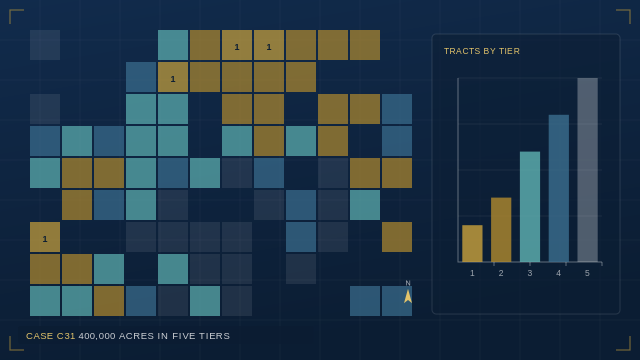
Ranking a 400,000-acre public lease sale

For one of the largest lease sales in the basin's history, every tract was graded into five tiers by structure and stacked-pay potential, and top-tier tracts were checked against offset logs.

Key findingA short list of Tier-1 tracts with a bid priority, instead of bidding on acreage count.

Resource play review

Permian Basin · New Mexico

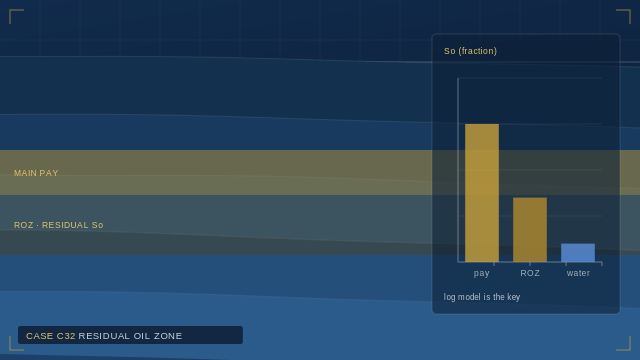
Residual-oil-zone potential under a mature carbonate

A San Andres residual oil zone and deeper targets were reviewed in a 33-slide regional study of geology and sweet spots, including log-based residual-saturation methods beyond Archie.

Key findingROZ value depends on measuring residual saturation correctly — the log model matters more than the map.

Investment evaluation

Eagle Ford · South Texas

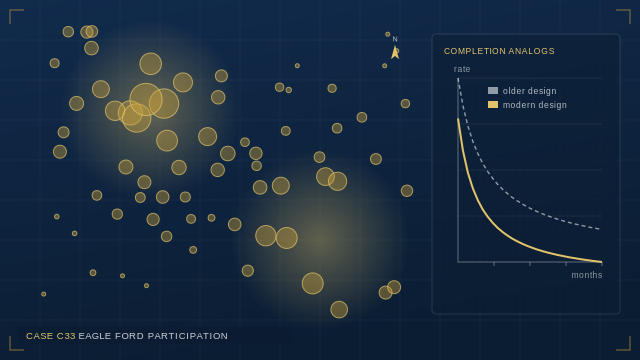
Participation in an Eagle Ford programme

A financing and participation opportunity was evaluated in a 37-slide study with sweet-spot maps and completion-optimisation analogs, alongside a county-by-county Eagle Ford log search.

Key findingSweet-spot mapping and completion analogs set where the programme should drill first, before the financing terms were discussed.

Data-room review

Permian Basin · CO₂ flood

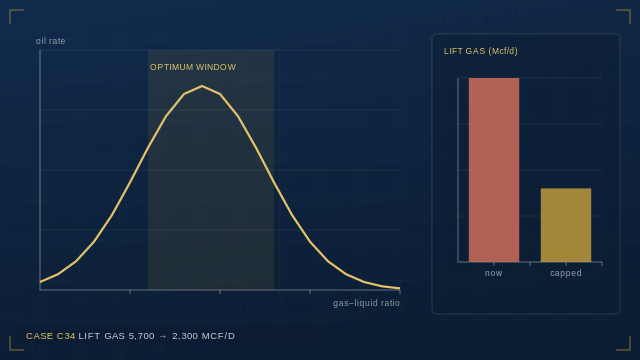
Lift gas in a mature CO₂ flood

Wells in a mature CO₂ flood slugged under gas lift; test data showed a gas–liquid-ratio window where fluid and oil both peak.

Key findingCapping the ratio could cut lift gas from about 5,700 to 2,300 Mcf/d and free gas for injection.

Programme review

DJ Basin · Colorado

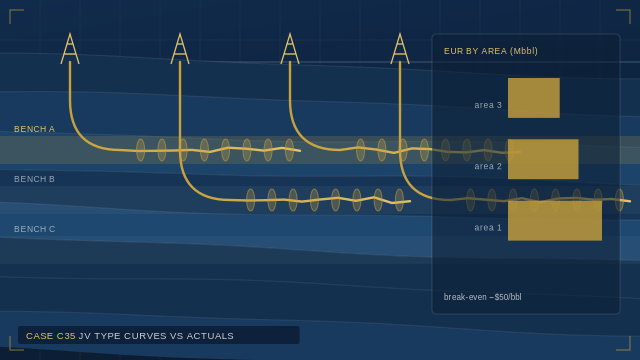
Non-operated horizontal programme: type curves versus actuals

Three areas of a horizontal joint venture were ranked and compared with type curves, with 40–80 acre bench spacing and break-even prices.

Key findingActual cumulative oil stayed within about 10% of type curves; weighted break-even near $50/bbl.

Market screening

US onshore · multi-basin

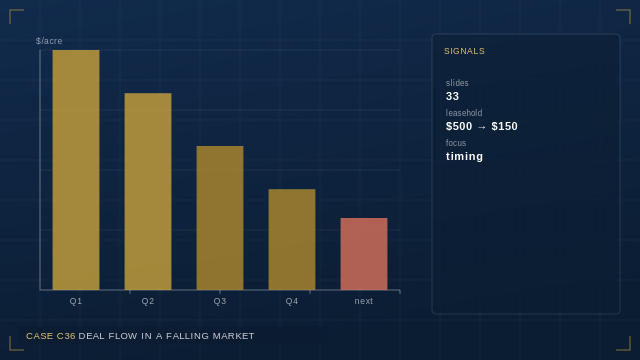
Reading a falling market: one season of deal flow

Opportunities from a major industry deal show were screened in a 33-slide brief, with price signals recorded for leasehold and working interests across basins.

Key findingLeasehold priced at about $500/acre in one basin was moving toward $150 — timing mattered as much as geology.

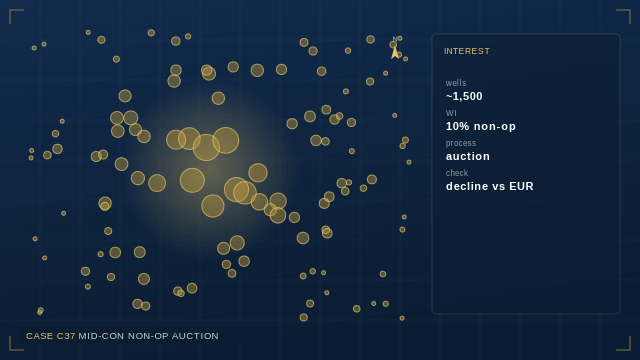
Screening

Mid-Continent · Oklahoma & Kansas

Non-operated Mississippian Lime interests at auction

A 10% non-operated interest in about 1,500 producing wells was screened from the bankruptcy auction materials.

Key findingSeller EURs needed independent decline checks, and non-operated status limits information and control.

Latin America

8

Andean forelands, heavy-oil belts and the Caribbean — bid rounds, producing blocks and EOR.

Block evaluation

South America · Andean back-arc foreland

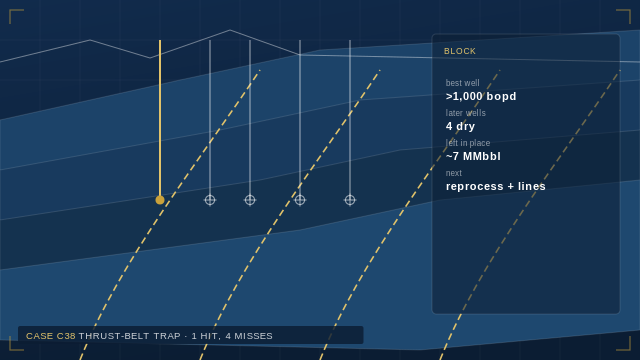
Fractured-limestone thrust-belt block

A block on the flank of an inversion anticline, with fault-bounded traps in fractured limestone, was evaluated and valued from regional unit-reserve prices. One early well flowed over 1,000 bopd after acid; four later wells missed.

Key findingTrap size, not reservoir quality, limited the block (about 7 MMbbl left in place) — reprocess old seismic and shoot pilot lines before any 3D.

Bid-round screening

South America · northern Andean forelands

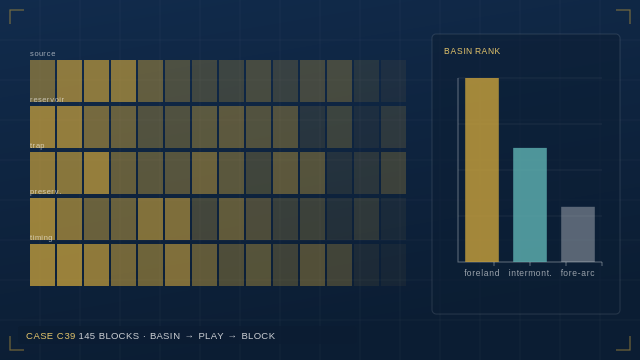
Two bid rounds, 145 blocks, one workflow

A 43-block, four-basin round and a 102-block, six-basin mini-round were screened from basin to play to block on source, reservoir, trap, preservation and timing.

Key findingForelands first, intermontane second, fore-arc last — buy data only for the best foreland group and drop mountain-core blocks.

Bid-round screening

South America · sub-Andean jungle forelands

Nineteen blocks to four, tested against minimum economic field size

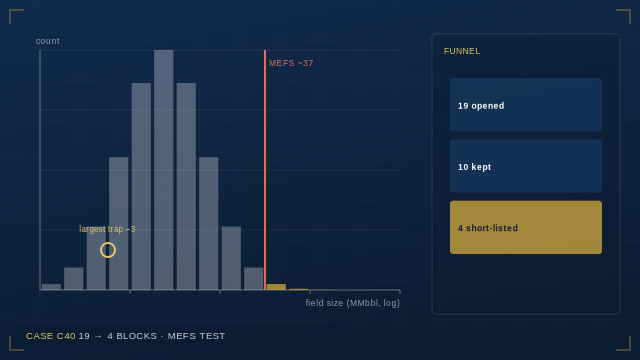
A national company opened 19 blocks; operator screening kept ten and our rapid evaluation narrowed them to four in three foreland basins.

Key findingMinimum economic field size in the main basin was about 37 MMbbl, while the largest trap in one block held about 3 MMbbl — decline, or join an existing development.

Asset package screening

South America · Oriente-type foreland

Producing blocks when two data vendors disagree

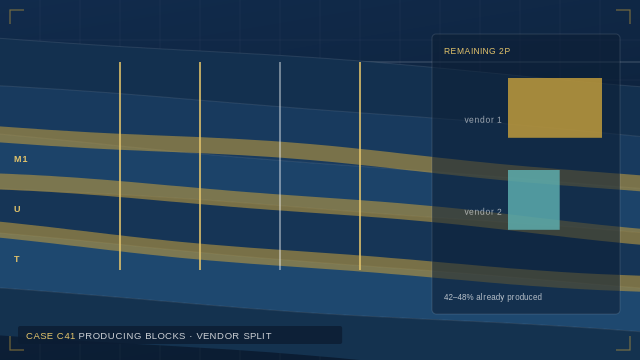
A seller's equity in two producing jungle blocks — about 60 MMboe of remaining 2P, with 42–48% of recoverable oil already produced — was screened for infill and waterflood upside using regional analogs.

Key findingUpside on the operated block was credible, but vendor reserves diverged widely — more production data before any price talk.

Technical support · EOR

South America · Oriente-type foreland

EOR for hot, saline heavy-oil sandstones

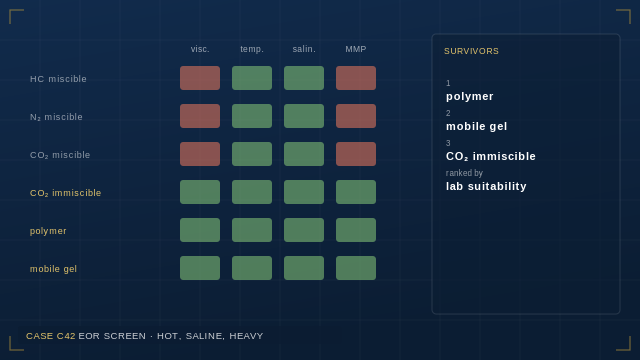
EOR options for two main sandstone reservoirs were screened on viscosity, temperature, salinity and minimum-miscibility pressure.

Key findingMiscible gas failed; polymer, mobile gel and immiscible CO₂ remained, with polymers ranked by laboratory suitability.

Technical support

South America · extra-heavy-oil belt

Development mode for a heavy-oil belt block

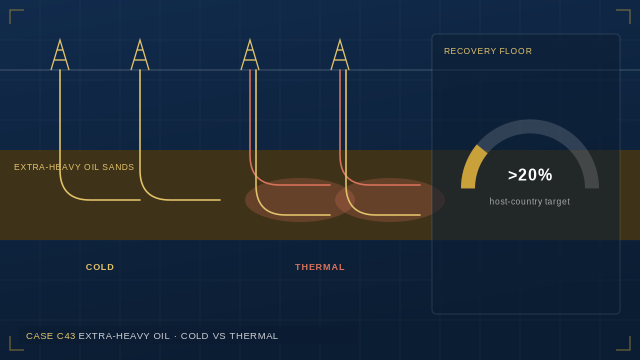
Development-mode work for an existing extra-heavy-oil block and its extension, targeting more than 20% ultimate recovery, with technique selection and a technical-economic scorecard.

Key findingA host-country recovery floor, not rate alone, drives the choice between cold and thermal development.

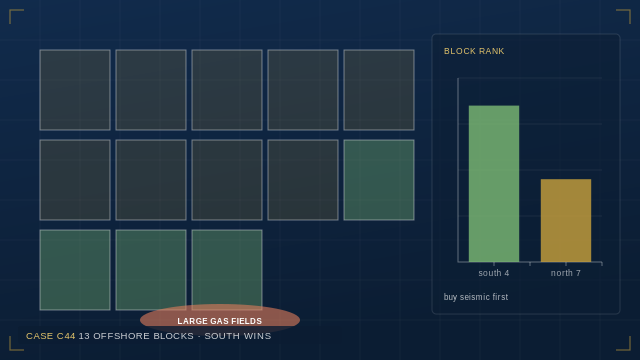
Block evaluation

Caribbean · offshore trough

Thirteen offshore blocks ranked in two days

Thirteen offshore blocks on a passive margin later overprinted by compression were ranked on regional seismic after a short briefing. Large gas fields lie off the southern margin; source maturity and seal after volcanism were uncertain.

Key findingFour southern blocks ranked above seven northern ones; generous terms justified buying seismic before any further step.

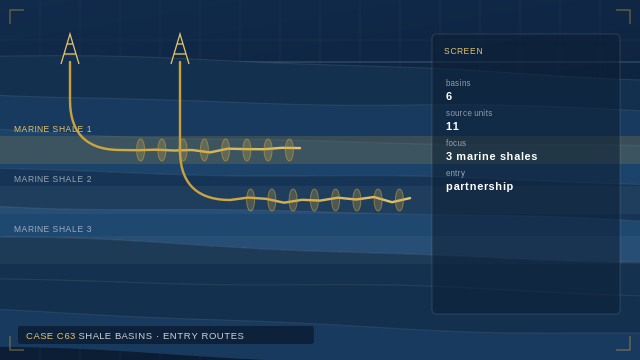
Country screening

South America · shale basins

Shale plays and entry routes in a South American country

Eleven source intervals in six basins were reviewed with the investment climate and cooperation routes, including partnership with the national oil company; one basin stood out for three marine shales.

Key findingThe resource base is large, but entry depends on a risk-managed partnership.

Africa

10

Atlantic margins, deepwater fans and continental rifts — packages, farm-ins and discoveries.

Project evaluation

East Africa · Indian Ocean margin

Shallow heavy-oil steamflood

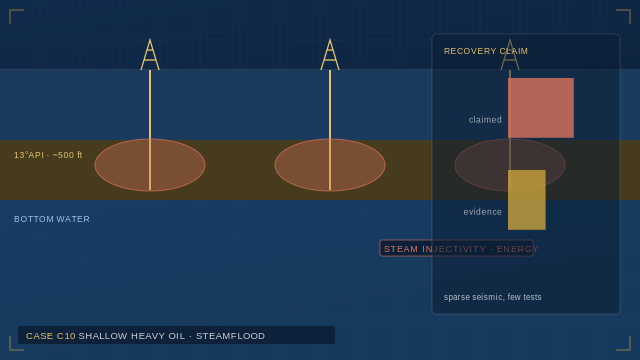
A licence-stage shallow heavy-oil development (about 13°API, a few hundred feet deep) with a steamflood pilot running for about three years and an approved development plan.

Key findingReported 40–70% recovery factors were flagged as highly uncertain given sparse seismic and limited tests; bottom water, low reservoir energy and steam injectivity were the key risks.

Asset package evaluation

West Africa · Gulf of Guinea

Five-country upstream exit package

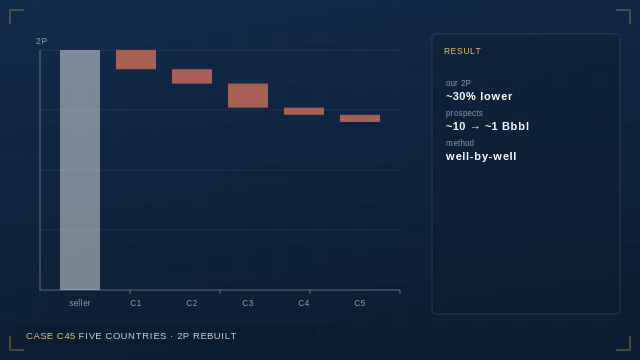
A major's exit package — producing, discovered and exploration assets in five countries — was valued country by country; proved reserves were rebuilt well by well and key prospects verified in the data room.

Key findingOur 2P came out about 30% below the seller's; roughly 10 billion barrels of unrisked prospects shrank to about one billion after risking.

Bid-round screening

North-West Africa · Atlantic margin

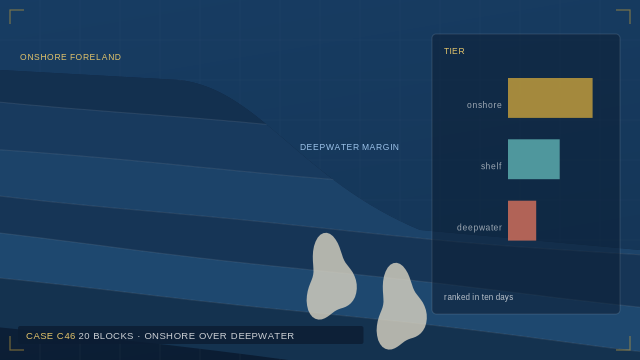
Twenty-block round: onshore foreland over deepwater

Thirteen offshore and seven onshore blocks of a national round were ranked in ten days.

Key findingOnshore blocks in a producing foreland ranked first; deepwater blocks were penalised for eroded source, salt deformation and repeated ownership changes.

Farm-in evaluation

West Africa · Atlantic shelf margin

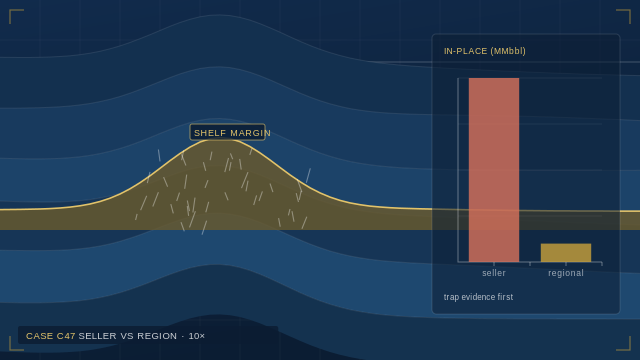
Offshore farm-in with a tenfold resource gap

Three offshore blocks of about 15,000 km², in water to 3,500 m, had six wells on one shallow high with shows and oil tests.

Key findingSeller estimates (180 MMbbl for one fan, 1 billion+ for the play) sat ten times above regional assessments — trap evidence first, economics later.

Acquisition evaluation

West Africa · deepwater delta

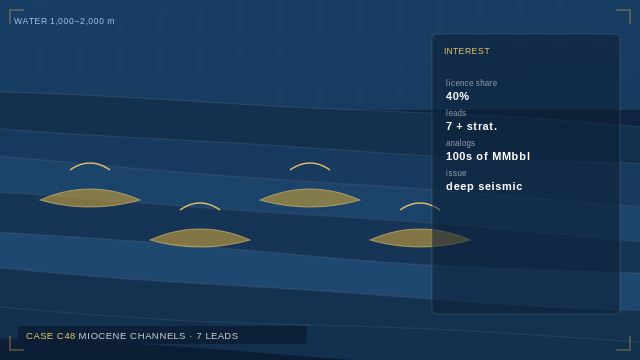
Deepwater interests on a proven fan fairway

A 40% deepwater licence interest and a separate two-licence sale on the same fairway were evaluated: seven Miocene channel leads plus stratigraphic targets, against nearby discoveries of hundreds of MMbbl.

Key findingPoor deep-section seismic meant the seller's risked resource could not be confirmed.

Field evaluation

Central Africa · lake rift basin

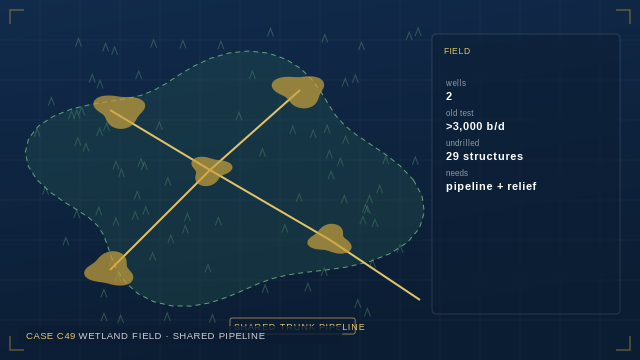
A small field under a wetland: pipeline or nothing

A two-well discovery (one tested over 3,000 b/d decades ago) in a basin with 29 undrilled structures, most under a protected wetland, was reviewed for geology, reservoir and economics.

Key findingStand-alone development is marginal; it works only if neighbouring fields share a right-sized pipeline with fiscal relief.

Updated evaluation

West Africa · deepwater turbidites

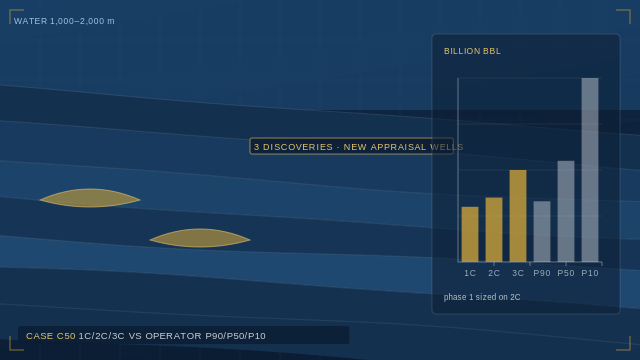
Independent 1C/2C/3C for a deepwater discovery

Three discoveries in 1,000–1,700 m of water were re-evaluated after new appraisal wells and compared with the operator's probabilistic range.

Key findingOur 1C/2C/3C of about 0.6/0.7/1.0 billion barrels against the operator's 0.65/1.1/2.0 — phase-one development designed on 2C.

Farm-in evaluation

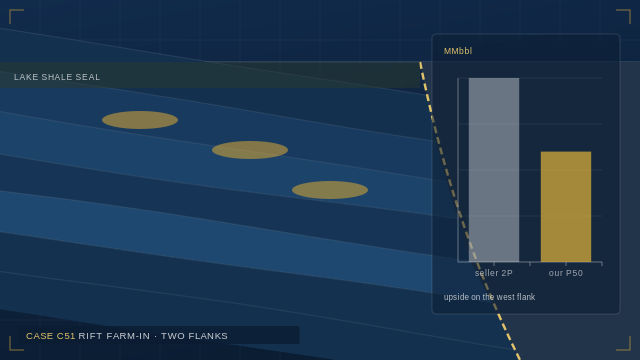
East Africa · continental rift

Four rift blocks from a cash-constrained seller

Interests in two producing-trend blocks and two under-explored blocks of an intracontinental rift with over 5,500 m of fill were evaluated.

Key findingSeller 2P near 520 MMbbl gross versus our P50 trap resource near 310 MMbbl; the upside lies in the under-drilled flank.

Field evaluation

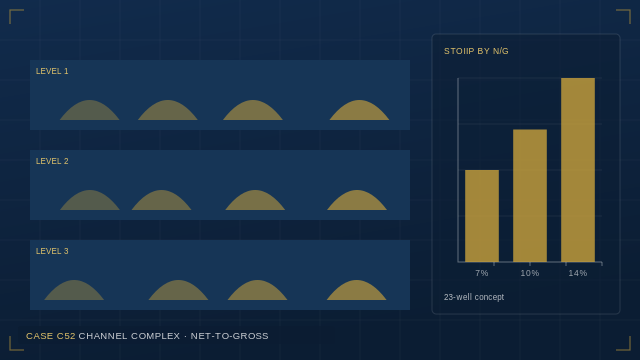
North-West Africa · deepwater channels

Net-to-gross from seismic in a channel-complex field

A deepwater field near 500 MMbbl in place and about 10% recovery was assessed for a 23-well subsea-plus-platform concept; three stacked channel levels were tied to wells and net sand derived from amplitude.

Key findingThe channel/non-reservoir cut-off drives in-place volume, so amplitude-to-sand calibration was tested at 7, 10 and 14% net-to-gross.

Block evaluation

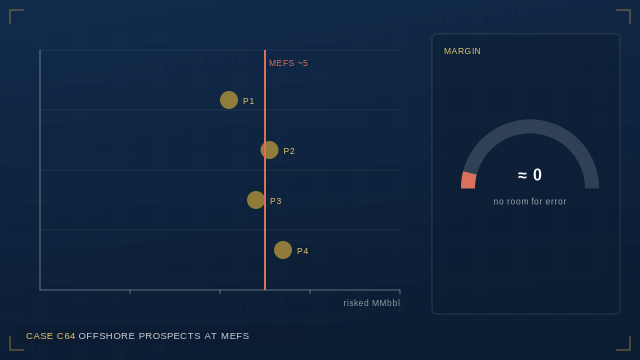
North Africa · offshore

Offshore prospects at the edge of economic size

Four offshore prospects were risked and compared with the minimum economic field size for an offshore development.

Key findingWith a minimum economic size near 5 MMbbl and risked prospects of about the same size, the block offered no margin for error.

Middle East, Russia & Central Asia

7

Pre-salt carbonates, Caspian gas and Middle East waterfloods.

Farm-in screening

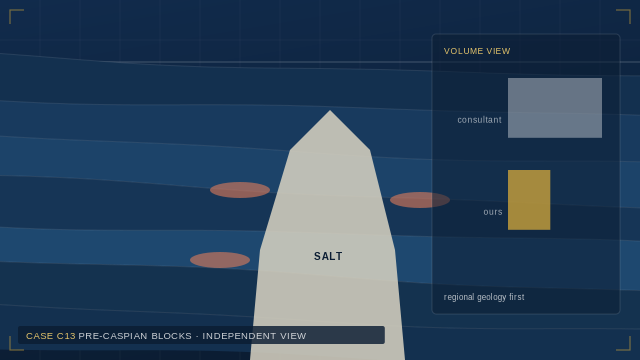
Central Asia · Pre-Caspian

Pre-Caspian exploration blocks

Two adjacent exploration blocks screened while the holder's consultant reported trap-level volumes.

Key findingAn independent view from regional geology, not the consultant's numbers.

Technical support

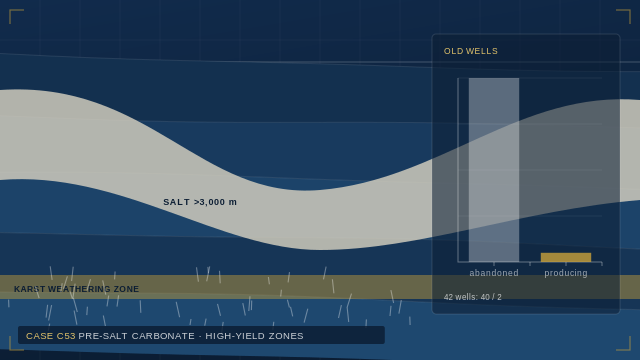
Central Asia · Pre-Caspian pre-salt

Finding the high-yield zones in an overpressured pre-salt carbonate

Below more than 3,000 m of salt, a carbonate reservoir had 42 old wells, of which 40 were abandoned. 3D imaging, logs and acid-fracture trials were combined to locate productive rock.

Key findingHigh yield is controlled by facies, karst, fractures and overpressure beneath the unconformity — placing wells there turned a marginal field into one that beat its targets.

Farm-in evaluation

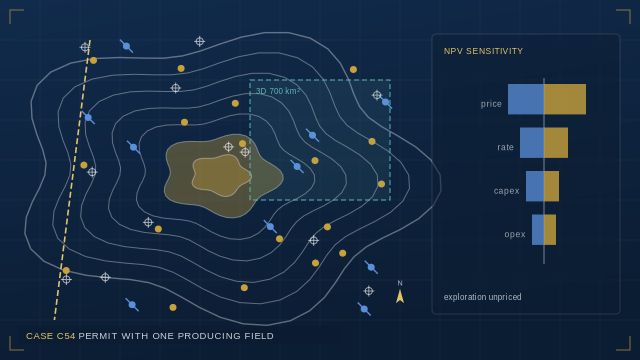
Central Asia · Pre-Caspian margin

Exploration permit with one producing field

A 3,458 km² permit with about 50 wells (three producing oil), 2,400 km of 2D and 700 km² of 3D was evaluated with a development forecast and price-case economics.

Key findingEconomics rested on one field and exploration risk was unpriced — labelled indicative, not decision-grade.

Block evaluation

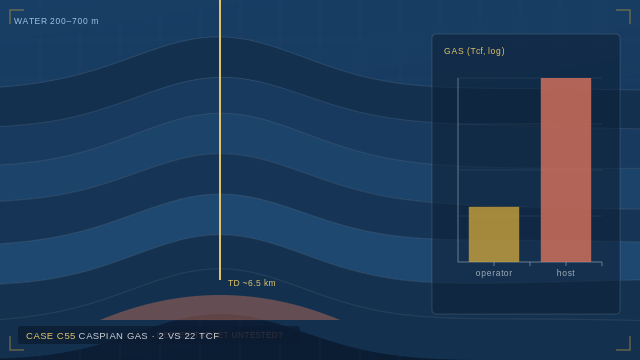
Caspian · deepwater structure

A gas structure with a tenfold resource gap

One 6.5-km well had been drilled on a structure in 200–700 m of water; the previous operator risked about 2 Tcf while the host state held 22 Tcf.

Key findingAnalyse the data package first — closure confidence, reservoir depth below 6,000 m and water depth decide whether to buy.

Technical support

Middle East · Arabian-platform carbonate

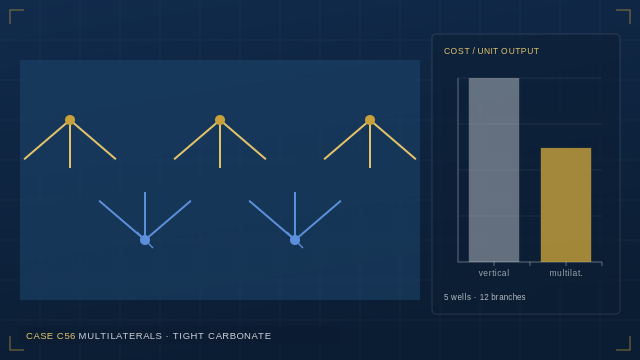
Multilateral wells for a tight, porous carbonate waterflood

A technology programme for multilateral injectors and producers covered reservoir prediction, geomodelling, window milling, completion and lift, targeting five wells with 12 branches.

Key findingMultilaterals were justified on drilling cost per unit of production — targeted below two-thirds of a vertical well.

Bid-round screening

Middle East · Levant

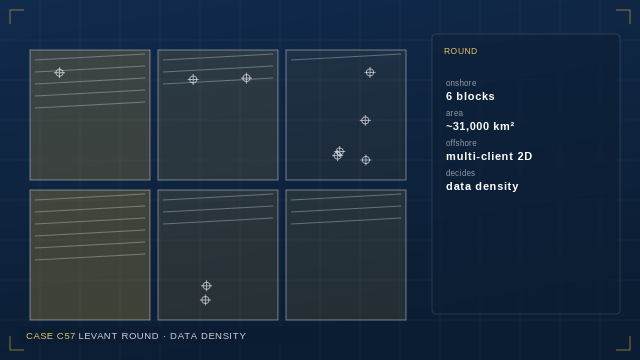
Six onshore blocks and a first offshore opening

Six onshore blocks of about 31,000 km² and a first offshore opening covered only by multi-client 2D were compared block by block on seismic, wells and shows.

Key findingData density and drilling history decided which blocks justified buying a data package.
Technical support

Central Asia · producing carbonate and sandstone fields

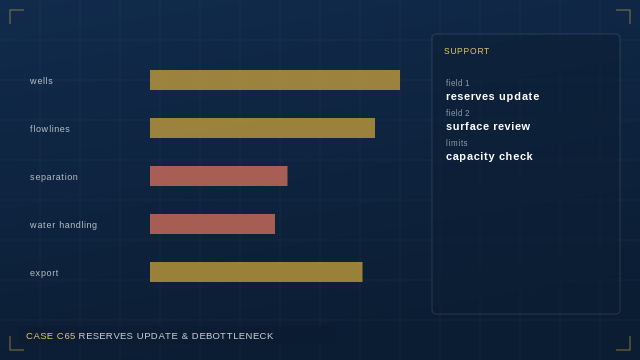
Reserves update and facility debottlenecking

Technical support covered a reserves update for a large producing carbonate field and a review of facility bottlenecks on a sandstone field.

Key findingSeparating reservoir limits from surface-capacity limits showed where facility work could add rate.
Asia-Pacific

10

Deepwater margins, archipelago basins and frontier rounds from Southeast Asia to Australia.
Block evaluation

Southeast Asia

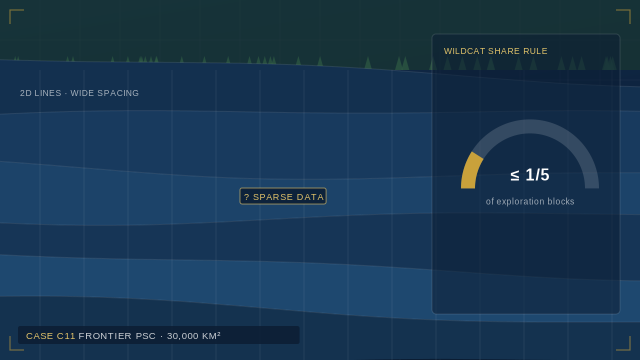
Frontier onshore PSC block

A coastal-plain block of about 30,000 km² under a production-sharing contract, assessed as a pure frontier.

Key findingMinimum work obligations contradicted sound investment logic; recommended gathering field evidence and negotiating directly with the host government later.

Bid-round evaluation

South Asia

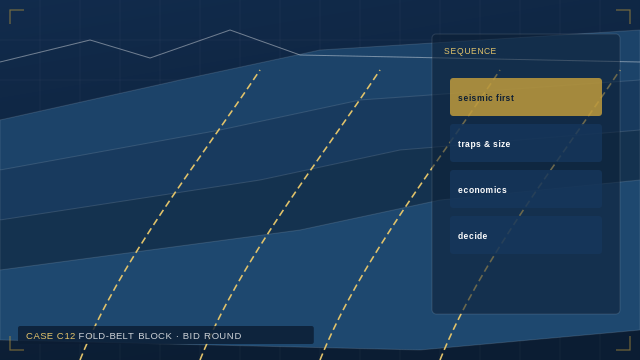
Fold-belt block bid

A block in the eastern fold belt of a delta-type basin, evaluated during a national bid round.

Key findingRecommended seismic first, then traps and resource size, then economics — before deciding to cooperate.

Corporate valuation

Asia-Pacific

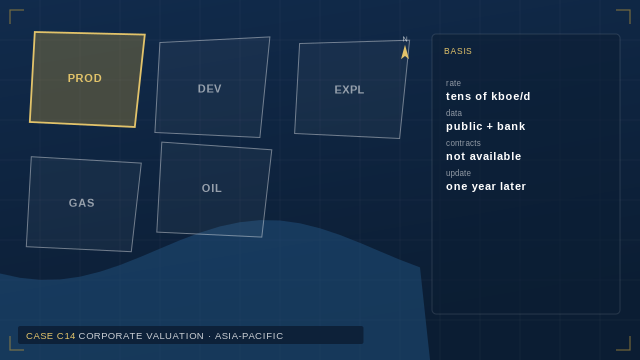
National-scale producer acquisition

A possible acquisition of a country's largest producer, valued from public and bank data without contract detail.

Key findingReserves-and-production valuation, updated a year later with commercial databases.

Technical support · seismic

Southeast Asia · deepwater margin

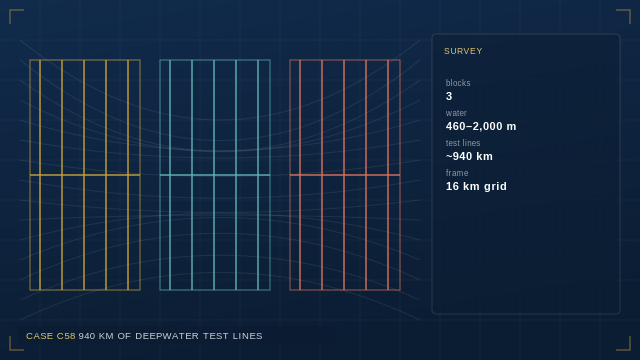
Test lines for three deepwater blocks

For three blocks of about 1,000–5,200 km² in 460–2,000 m of water, a 2D grid was designed with main lines cutting sand bodies in the dip direction.

Key findingAbout 940 km of test lines met the licence deadline and calibrated parameters for the later full survey.

Post-drill & exit review

Southeast Asia · onshore basin

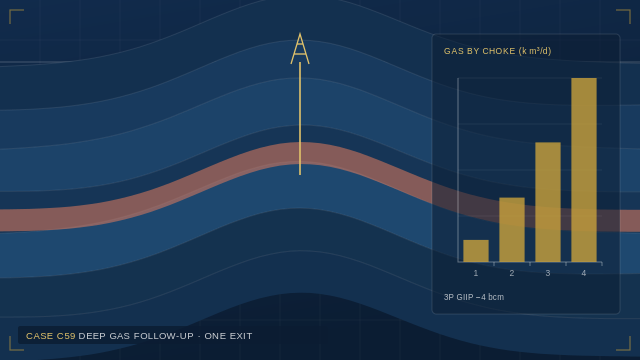
A deep-gas breakthrough and an exit, side by side

A deeper test flowed gas rising from about 14,000 to 120,000 m³/d across chokes, with 3P gas in place near 4 billion m³; in another three-block area five wells had shows but no commercial reservoir.

Key findingFollow up the discovery in one block, exit the other — decided on reservoir quality and remaining analog traps.

Portfolio triage

Southeast Asia · archipelago basins

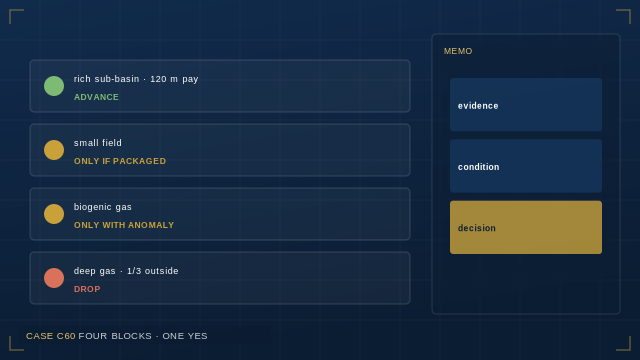
Four blocks in one memo: advance one, drop three

Four blocks were triaged: a rich sub-basin with 120 m of pay and complex fault blocks where the team had a technical edge; a small field; a biogenic-gas block; and a deep-gas closure one-third outside the licence.

Key findingEach block got a conditional yes or no, with the exact missing evidence that would change the answer.

Bid-round screening

Australia · North-West Shelf

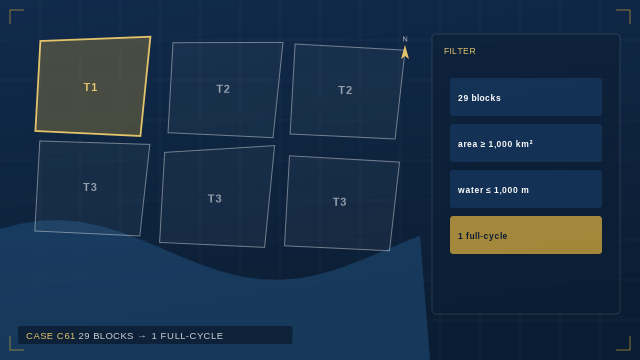
29 blocks filtered, one taken through full-cycle economics

A national round of 29 blocks in eight basins was filtered by area and water depth and tiered; one block went through petroleum-system risking, exploration plan, development concept and full-cycle economics.

Key findingA threshold filter plus tiering leaves only a few blocks worth the cost of full evaluation.

Fiscal & technical review

Asia-Pacific · Timor Sea frontier

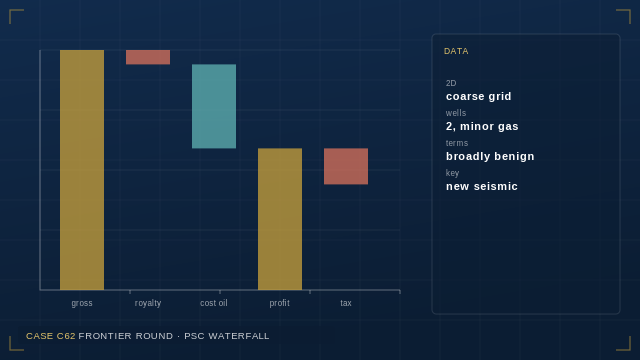
Frontier offshore round: thin data, real terms

A frontier round with a coarse 2D grid and two early wells with minor gas shows was evaluated together with its production-sharing terms — royalty, cost recovery, state back-in and tax — mapped against the exploration phases.

Key findingTerms were broadly benign, so the decision turns on whether new seismic can show real traps.

PSC economics

North-East Asia · onshore basins

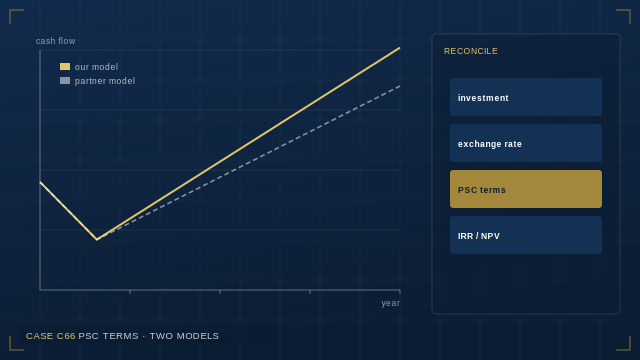
Production-sharing terms against the partner's model

A development scheme under production-sharing contracts was evaluated — investment, exchange-rate and plan parameters — and our model was reconciled with the foreign partner's IRR/NPV model.

Key findingThe work centred on proposed term changes and on reconciling the two models before negotiation.

Concession screening

Southeast Asia · producing concessions

Producing concessions with too little data

Producing concessions offered for transfer were screened in a 20-slide review: an active petroleum system with exploration risk partly retired.

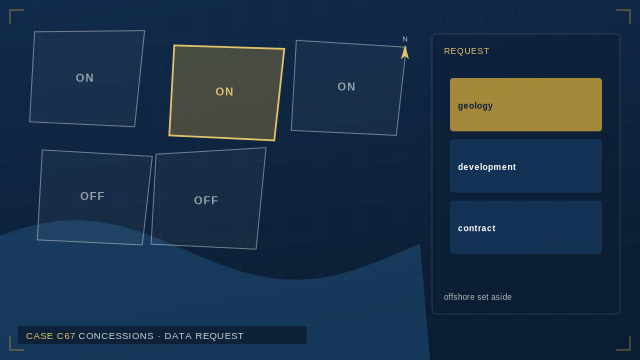
Key findingToo little data to call good or bad — geology, development and contract files requested; offshore blocks set aside.

Cases describe evaluations and studies led by our principal for clients and for previous employers, 2005–2026. Names, locations and figures are anonymised and rounded; no confidential data or original data-room material is shown. Every illustration is our own schematic drawn for that case.

What the cases have in common

01

Headline numbers hide the distribution

Package production, average EUR and total acreage routinely conceal that a few wells carry the value and many carry the liability.

02

Water decides more deals than oil

Water cut, disposal outlets, coning and handling cost turned several attractive-looking assets into declines — and found oil others had written off.

03

Terms can outweigh rock

Entry price, carries, work obligations and fiscal terms were as decisive as reservoir quality.

04

Independent numbers before negotiation

Our volumes were often 30% or more below seller and consultant claims — and occasionally above them. Either way, the client knew before price was discussed.

Basins and regions in our experience

USAPermian (Midland, Eastern Shelf, New Mexico) · Eagle Ford · East Texas · Fort Worth & Bend Arch · Mid-Continent · DJ · Powder River · Williston · San Juan & Four Corners · Gulf Coast

INTLAndean forelands · Caribbean · Gulf of Guinea · North-West & East Africa · Central African rifts · Pre-Caspian & Caspian · Middle East · Levant · Southeast Asia · Australia · Timor Sea · North-East Asia

Bring us the asset that keeps you up at night.

Share what you have — production history, logs, a data room link or just a description. We will tell you within two business days what we can find and what it would take.

Request a Diagnosis